Bespoke Cabinetry Engineering: Enhancing Functionality with the Overlay Cabinet Hinge
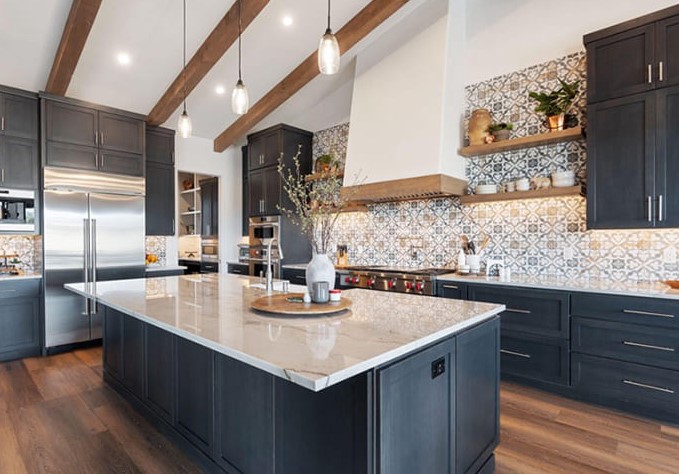
Source:https://www.revivedesignandrenovation.com
I’ve spent a decade walking through luxury homes, and I can tell you a secret: the difference between a kitchen that looks “high-end” and one that looks “DIY-gone-wrong” isn’t the price of the wood. It’s the gaps. I’ve seen $50,000 custom walnut cabinets ruined because the doors were sagging or misaligned by a mere 1/8th of an inch.
Whenever a client complains that their kitchen feels “dated” or “cluttered,” I don’t usually reach for a sledgehammer first. I look at the hardware. Specifically, I look at the Overlay Cabinet Hinge. It is the unsung hero of interior engineering—the literal pivot point where craftsmanship meets daily utility.
Mastering the use of the right hinge is like learning how to tailor a suit; it’s the fine-tuning that turns a basic box into a masterpiece of bespoke cabinetry.
The Hidden Mechanics: Understanding the Overlay Cabinet Hinge
For the uninitiated, the term “overlay” refers to how much the cabinet door covers the face frame or the cabinet box. If you think of your cabinet box as a window, the door is the shutter. Does the shutter sit inside the frame, or does it lay on top of it?
In most modern American and European designs, we use the Overlay Cabinet Hinge to allow the door to “lay over” the opening. This creates a clean, streamlined look that hides the raw edges of the cabinet box.
The Analogy of the Mask
Think of an overlay hinge like a high-quality face mask. An inset door (one that sits flush inside the frame) is like makeup—it has to be perfectly applied, or every flaw shows. An overlay door is like a mask that sits on top; it provides a consistent, beautiful surface while hiding the “imperfections” of the structural box behind it.
1. Full Overlay vs. Half Overlay: Which Engineering Path to Take?
One of the most frequent mistakes I see in mid-level home renovations is choosing the wrong degree of overlay. This isn’t just about looks; it’s about clearance and physics.
Full Overlay Cabinet Hinge
A Full Overlay Cabinet Hinge is designed so the door covers almost the entire face of the cabinet side or frame, usually leaving only a tiny 1/16th or 1/8th of an inch gap.
-
The Look: It mimics the appearance of “frameless” European cabinets.
-
The Benefit: It provides the maximum amount of storage access and a sleek, continuous wall of cabinetry.
-
The Catch: You must be extremely precise. If your floor isn’t level, these doors will rub against each other instantly.
Half Overlay (Partial Overlay)
The Half Overlay Cabinet Hinge is common in “back-to-back” cabinets where two doors share a single partition or “stile.”
-
The Engineering: Each door only covers half of the shared wood frame.
-
The Practicality: This gives you more “margin for error.” It’s the go-to for many traditional American-style builds where the wood frame is meant to be partially visible.
2. The Technical Edge: Why “Concealed” is King
In my early years, we used a lot of “butterfly” or surface-mount hinges. They were easy to install, but they were a nightmare to adjust. If the house settled (and houses always settle), the doors would go crooked, and you’d have to redrill holes.
Modern engineering has gifted us the Concealed Overlay Cabinet Hinge, often called the “Cup Hinge” or “Euro Hinge.”
-
Three-Way Adjustability: These hinges allow you to adjust the door Up/Down, Left/Right, and In/Out just by turning a screw.
-
Soft-Close Integration: Most high-quality overlay hinges now come with built-in hydraulic dampers. No more slamming doors—just a satisfying, silent glide.
-
Durability: A high-end hinge is rated for 50,000 to 100,000 cycles. That’s a lot of midnight snacks.
3. How to Measure for an Overlay Cabinet Hinge Replacement
If you are modernizing your existing space, you can’t just buy “a hinge.” You need to measure your overlay distance.
-
Close the cabinet door.
-
Apply a piece of masking tape to the cabinet frame, aligned perfectly with the edge of the door.
-
Open the door and measure the distance from the edge of the opening to the edge of the tape.
-
Common sizes: Usually, you’ll find 1/2-inch, 1-1/4-inch, or 1-3/8-inch overlays.
Pro Tip: If you are building from scratch, I always recommend a 1-1/4 inch overlay. It provides a modern, beefy look that hides the frame effectively without requiring the hyper-precision of a full European overlay.
4. Installation Physics: The “Forstner Bit” Requirement
Installing a concealed Overlay Cabinet Hinge requires boring a hole into the back of the door. This is where many DIYers get nervous. You’ll need a 35mm Forstner bit.
Unlike a standard drill bit, a Forstner bit creates a flat-bottomed hole. I’ve seen people try to use a spade bit—don’t do it. A spade bit has a long pilot point that will poke right through the front of your expensive cabinet door before the hole is even deep enough for the hinge cup.
The Step-by-Step Engineering Process:
-
Mark your Center: Usually 3 or 4 inches from the top/bottom and exactly 22.5mm from the edge (check your hinge specs!).
-
Depth Control: Use a drill press or a jig to ensure you don’t drill too deep.
-
Parallel Alignment: Use a straight edge to ensure the two hinges are perfectly parallel before driving the screws.
5. Expert Advice: Avoiding the “Hidden” Failure Points
After a decade in the field, I’ve developed a “sixth sense” for hardware failure. Here are the warnings I give my apprentices:
-
The Weight Factor: If you have a door taller than 40 inches, do not use just two hinges. The leverage and weight will eventually warp the cup holes. Use three hinges for anything over 40 inches and four for pantry-sized doors.
-
Material Matters: If your cabinets are made of MDF (medium-density fiberboard), standard screws will eventually pull out. Use “Varianta” screws or plastic dowel inserts to give the hinge a “bite” that won’t strip over time.
-
The Corner Conflict: Be careful with full overlay hinges in corners. If you don’t use a filler strip, the doors will collide when you try to open them at the same time.
Summary of Hinge Types and Applications
| Feature | Full Overlay | Half Overlay | Inset (Non-Overlay) |
| Visibility | Hides 95% of frame | Hides 50% of frame | Frame is 100% visible |
| Difficulty | High (Requires Precision) | Medium | Very High |
| Style | Modern / Seamless | Traditional / Transitional | Craftsman / Classic |
| Best For | Max Storage | Shared Partitions | Furniture-grade pieces |
Engineering Your Perfect Space
Choosing the right Overlay Cabinet Hinge is the bridge between “standard” and “bespoke.” It’s an inexpensive upgrade that fundamentally changes how you interact with your home. Every time you open a door and feel that smooth, silent resistance, you’re experiencing the result of good engineering.
Don’t settle for sagging doors or noisy cabinets. Take a Saturday, grab a Forstner bit, and give your cabinetry the structural integrity it deserves.
Are you planning a kitchen refresh or building your first set of cabinets? Tell me about your project in the comments below—especially if you’re struggling with door alignment. I’d love to help you troubleshoot your layout!