Premium Entertaining Infrastructure: Driving Value with the Basement Wet Bar
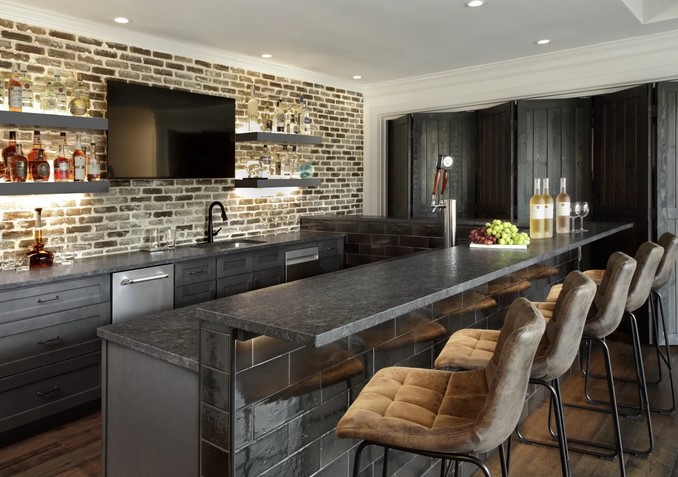
Source:https://davidreno.ca
You’ve finally finished the basement. The home theater is calibrated, the plush sectional is in place, and the lighting is dimmed to a perfect cinematic glow. But fifteen minutes into the movie, someone wants a cold sparkling water. Another guest needs a refill on their cocktail. Suddenly, you are trekking up two flights of stairs to the kitchen, missing the best scene and losing the “vibe” of the evening.
In my fifteen years of structural consulting and high-end renovations, I’ve seen this exact scenario play out in hundreds of homes. A basement without a dedicated beverage station is just a finished room; a basement with a Basement Wet Bar is an entertainment destination. When we talk about “Premium Entertaining Infrastructure,” we aren’t just talking about a place to pour drinks. We are talking about a strategic asset that increases your home’s appraisal value and fundamentally changes how you use your living space.
The “Subterranean Luxury” Shift: Why a Wet Bar Matters
Most homeowners start with a “dry bar”—essentially just a cabinet and a countertop. But the moment you add a sink and running water, you move from “furniture” to “infrastructure.” The utility of having a dedicated drainage system and a water source downstairs cannot be overstated. It eliminates the “upstairs-downstairs” commute and allows the basement to function as a self-contained suite.
I remember a project for a client who was skeptical about the cost of running plumbing through a concrete slab. We pushed forward with a sleek, minimalist Basement Wet Bar featuring matte black fixtures and integrated LED shelving. Six months later, they told me that 90% of their hosting now happens downstairs. The kitchen is for prep; the basement is for the “experience.”
Think of a wet bar like the “pit crew” of a racing team. The race happens on the track (your theater or game room), but the pit crew (the bar) provides the fuel and maintenance that keeps the race going without a hitch. Without the pit crew, the whole event eventually grinds to a halt.
Engineering the Flow: Technical Specs for a Successful Build
Building a Basement Wet Bar involves more than just picking out pretty tiles. Because you are working “below grade” (underground), you have to respect the physics of water and waste.
1. The Drainage Dilemma: Gravity vs. Pressure
This is the most critical technical hurdle. In your upstairs kitchen, water drains down via gravity. In a basement, your drain line might be lower than the main sewer exit.
-
Ejector Pumps: If your bar is below the sewer line, you’ll need a “gray water” pump or a macerating pump system hidden inside the cabinetry.
-
Venting: Every sink needs an air vent to prevent “glugging” and sewer smells. I often recommend an AAV (Air Admittance Valve) for wet bars to avoid cutting a massive hole through your roof for a vent pipe.
2. Materiality in High-Humidity Zones
Even a finished basement has higher humidity than the rest of the house.
-
Cabinetry: Avoid cheap particle board. Use Plywood-core or Solid Wood cabinets. If water spills (and it will), particle board will swell like a sponge and ruin your investment.
-
Countertops: Go with Quartz or Granite. They are non-porous and “cold” materials that resist the condensation from chilled bottles.
3. Essential LSI Keywords to Know:
-
Rough-In Plumbing: The stage where pipes are installed before the walls are closed.
-
GFCI Outlets: Ground Fault Circuit Interrupter outlets, required by code within 6 feet of a water source.
-
Backsplash: The vertical protection for your wall, usually made of tile or stone.
-
Kick-Plate: The recessed area at the base of the cabinet that allows you to stand close to the bar.
Mastering the “Executive Look”: Design for ROI
To maximize the real estate value of your Basement Wet Bar, you want it to look “intentional,” not like an afterthought.
-
The Integrated Beverage Center: Don’t just slide a dormitory-style fridge under the counter. Invest in a front-venting under-counter beverage cooler. This allows the fridge to sit flush with the cabinets without overheating.
-
Floating Shelves vs. Upper Cabinets: In a basement, upper cabinets can feel heavy and “closet-like.” Use heavy-duty floating shelves with integrated puck lighting. It makes the space feel airy and allows you to display your glassware as art.
-
Stone Accents: I love using a “waterfall edge” on the countertop, where the stone continues down the side to the floor. It signals “high-end residential branding” instantly.
Expert Advice: The “Hidden Warning” of the Slab
Pro Tip: The Trenching Truth
Many contractors will suggest “up-flush” toilets or sinks to save money, but for a premium wet bar, you want a traditional drain.
Peringatan Tersembunyi (Hidden Warning): If you have to cut into your concrete slab to run a drain, you must ensure the “vapor barrier” (the plastic sheet under your concrete) is resealed. If you break that barrier and don’t tape it back together with specialized construction tape, you are inviting Radon gas and moisture to seep directly into your new bar area. Always supervise this step or hire a plumber who understands sub-slab integrity.
The ROI of Entertaining: Why It Pays Off
A well-executed Basement Wet Bar typically yields a 60% to 75% return on investment. But the “real” value is in the perceived footprint of the home. When a potential buyer walks into a basement that has a sink, a fridge, and a high-end counter, they don’t see a “finished basement”—they see a “second living floor.”
Think of it as future-proofing your home. Whether it’s for adult cocktail hours, a teen hangout spot, or eventually a “mother-in-law” suite, the wet bar is the anchor that makes the space multi-functional.
Maintenance: Keeping the “Wet” in the Right Place
-
Check the P-Trap: Basement sinks aren’t used as often as kitchen sinks. If the water in the “P-trap” (the U-shaped pipe under the sink) evaporates, sewer gases will enter the room. The Fix: Run the water for 30 seconds once a month to keep the trap full.
-
Seal Your Grout: Kitchen bars get spilled on. Use a penetrating sealer on your backsplash grout to prevent red wine or coffee stains from becoming permanent.
-
Appliance Dusting: Under-counter fridges have coils that get dusty fast in basements. Vacuum them every six months to keep the motor from burning out.
Building a Basement Wet Bar is a commitment to the quality of your home life. It is the ultimate “power move” in home improvement because it combines technical engineering with aesthetic luxury. It moves your home from a standard residential layout to a high-end, executive-level environment.
Stop making the trip upstairs. Reclaim your movie nights and your hosting duties by bringing the heart of the home downstairs.
Are you ready to stop trekking to the kitchen every time someone needs a refill? I’ve navigated some of the trickiest sub-slab plumbing layouts in the business. If you’re worried about how to drain a sink in your specific basement, I can help you determine if you need a pump or a gravity line. Would you like me to create a “Plumbing & Appliance Checklist” tailored to your basement’s specific dimensions?