Industrial Safety Training: Implementing the Comprehensive Fire Extinguisher Guide
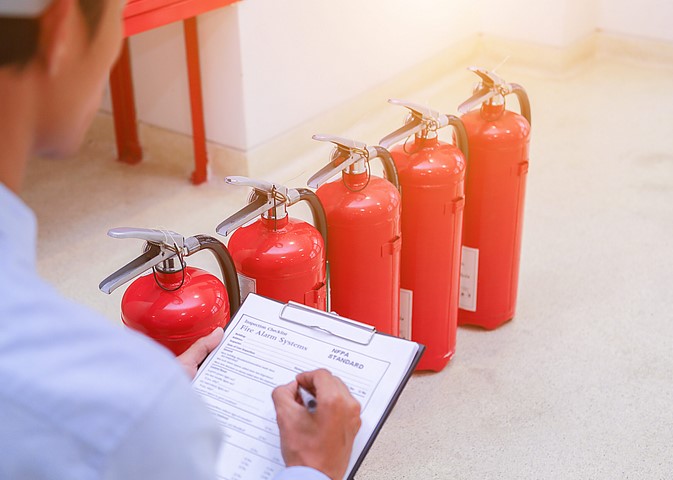
Source:https://www.impactsafetyinc.com
The alarm didn’t sound like the movies. It was a dull, persistent thudding from the workshop area of a mixed-use industrial complex I was managing three years ago. When I arrived, a junior technician was standing frozen, holding a water-based extinguisher while staring at a pooling pool of flaming hydraulic oil. Had he squeezed that handle, he wouldn’t have put the fire out—he would have caused an explosive “fireball” effect that likely would have leveled that section of the building.
In my decade-plus of home and industrial improvement, I’ve realized that having safety equipment is only 10% of the battle. The other 90% is the split-second technical knowledge of how to use it. This Fire Extinguisher Guide isn’t just about compliance; it’s about ensuring that when the “thudding” starts, you and your team act with surgical precision rather than panic.
Decoding the Fire Tetrahedron: Why One Size Doesn’t Fit All
To understand extinguishers, you have to understand the “Fire Tetrahedron.” Think of a fire like a four-legged stool. The legs are Heat, Fuel, Oxygen, and a Chemical Chain Reaction. If you kick any one of those legs out, the stool falls, and the fire dies.
However, the “leg” you choose to kick depends entirely on what is burning. In an industrial or home-workshop setting, using the wrong suppression agent is like trying to put out a campfire with gasoline.
The Five Classes of Fire
According to standard safety protocols, we categorize fires into five distinct classes. Recognizing these is the first step in any Fire Extinguisher Guide:
-
Class A: Ordinary combustibles (wood, paper, cloth, trash).
-
Class B: Flammable liquids (gasoline, oil, paint, lacquer).
-
Class C: Energized electrical equipment (motors, transformers, appliances).
-
Class D: Combustible metals (potassium, sodium, aluminum, magnesium).
-
Class K: Cooking media (fats, grease, oils)—mostly found in commercial kitchens.
Navigating the Hardware: Choosing Your Suppression Agent
When I walk through a facility for a safety audit, the most common “red flag” I see is a Class A water extinguisher placed next to an electrical panel. That is a recipe for electrocution.
Multi-Purpose ABC Dry Chemical
In most home improvement and light industrial settings, the ABC Dry Chemical extinguisher is the MVP. It uses monoammonium phosphate, which melts and coats Class A fires, and breaks the chain reaction of Class B and C fires. It’s the “Swiss Army Knife” of safety, but it leaves a corrosive yellow residue that can destroy sensitive electronics.
Carbon Dioxide (CO2) for Precision
For server rooms or areas with delicate machinery, I always recommend CO2 extinguishers. CO2 works by displacing the oxygen (suffocating the fire) and removing the heat with a cold discharge. The best part? No messy residue. The downside? It has a short range and is virtually useless outdoors where the wind can blow the gas away.
Specialized Agents: Class D and Clean Agents
In heavy industrial environments where we work with CNC machining or magnesium alloys, you need a Dry Powder extinguisher (not to be confused with Dry Chemical). These work by smothering the metal and absorbing the heat.
Tips Pro: Always check the Pressure Gauge monthly. If the needle isn’t in the green, the extinguisher is a decorative paperweight. In my experience, vibration in industrial shops can slowly loosen seals, leading to gradual pressure loss.
The PASS Method: Technical Execution Under Pressure
Knowing which extinguisher to grab is half the battle; knowing how to discharge it is the rest. In every safety training session I lead, we drill the PASS acronym until it becomes muscle memory.
-
P – Pull the Pin: This unlocks the operating lever and allows you to discharge the agent.
-
A – Aim Low: Point the nozzle or horn at the base of the fire, not the flames. If you aim at the flames, the agent will fly right through without hitting the fuel source.
-
S – Squeeze the Handle: This releases the pressurized suppression agent.
-
S – Sweep from Side to Side: Move the spray back and forth across the base of the fire until it appears to be out.
The “Watch and Wait” Rule
One “hidden” insight I’ve gained from years of fire-watch duty is that fires are deceptive. Just because the flames are gone doesn’t mean the heat is. Always stay in place for several minutes after the fire is out. If the fuel source is still hot enough, it can “re-flash” or spontaneously reignite once oxygen returns to the area.
Maintenance and Inspection Safety Standards
An extinguisher is a pressurized vessel. If it’s neglected, it can become a hazard itself. Following an Industrial Fire Extinguisher Guide means adhering to a strict inspection schedule.
Monthly Visual Inspections
-
Access: Ensure the unit is not blocked by boxes, machinery, or debris. In a busy shop, “temporary” storage often becomes a permanent barrier.
-
Physical Damage: Check for dents, rust on the cylinder, or a clogged nozzle.
-
Tamper Seal: Ensure the plastic tie that holds the pin in place is intact.
Annual Professional Maintenance
Once a year, a certified fire safety professional must inspect the internal components. For many industrial units, this includes a Hydrostatic Test every 5 or 12 years (depending on the type). This test involves pressurizing the cylinder with water to ensure it can still safely hold its operating pressure without exploding.
Strategic Placement: The “Exit First” Philosophy
I tell all my trainees the same thing: You are not a firefighter. A fire extinguisher is designed to put out a fire the size of a small trash can, or to create a path for you to escape.
-
Placement Height: Mount extinguishers so the top is no more than 5 feet above the floor for units under 40 lbs. This ensures someone with a smaller stature can still grab it quickly.
-
Travel Distance: In a high-hazard industrial area (like a woodshop), you should never be more than 30 feet away from an extinguisher.
-
The Exit Rule: Never put the fire between you and the exit. Always keep your back to an unobstructed door so you can flee if the fire grows beyond your control.
Never test an extinguisher by giving it a “quick squirt” to see if it works. Once the seal is broken, the internal pressure will slowly leak out over 24 hours, leaving the unit empty when you actually need it. If you use it even for a second, it must be professionally recharged immediately.
Cultivating a Culture of Safety
Optimizing an industrial asset isn’t just about the machines; it’s about the people operating them. Implementing a Fire Extinguisher Guide works best when it’s part of a broader “Safety First” narrative.
During my time managing property renovations, I found that the teams who were most successful were the ones who treated their safety gear with the same respect as their high-end power tools. When you view a fire extinguisher as a precision instrument rather than a red box on the wall, your reaction time drops and your safety margins soar.
The Role of Signage and Visibility
In a smoke-filled room, your vision is the first thing to go. High-visibility, photoluminescent (glow-in-the-dark) signage above each extinguisher station is a low-cost, high-impact upgrade. It’s these small, technical details that save lives during the first 60 seconds of an emergency.
Conclusion: Take Action Before the Smoke Appears
Fire safety isn’t a “set it and forget it” task. It requires consistent attention to detail, from checking the pressure gauges to practicing your “sweep” technique. By following this Fire Extinguisher Guide, you’re taking a massive step toward protecting your home workshop or industrial facility.
Don’t wait for an emergency to find out your extinguisher is empty or that you’ve forgotten the PASS method. Go check your nearest extinguisher right now—is the needle in the green? Is the path to it clear?
What’s your biggest concern regarding fire safety in your workspace? Have you ever had to use an extinguisher in a real-world scenario? Share your stories or questions below—it might just help someone else stay safe!