Kitchen Operational Logistics: Enhancing Workflow with the Kitchen Peninsula
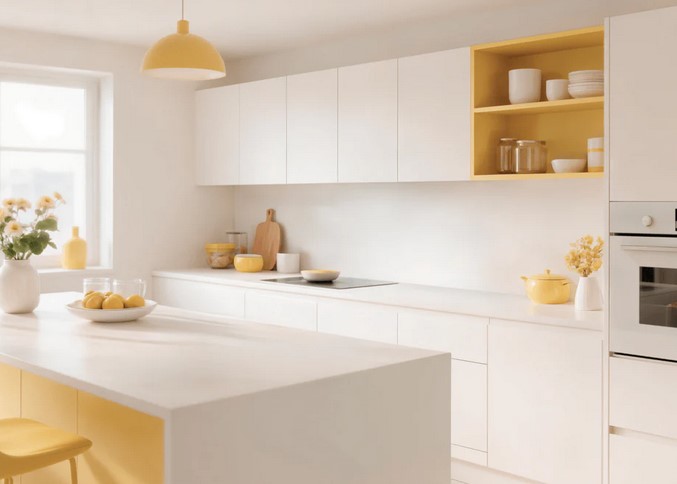
Source:https://m.media-amazon.com
You are hosting a dinner party. You have a pot of pasta boiling, a sauce simmering, and a salad that still needs tossing. Suddenly, your guests migrate into the kitchen. Within minutes, you are trapped in a three-foot corner of “dead space,” bumping elbows with your brother-in-law while trying to reach the colander. This “kitchen congestion” is the number one complaint I’ve heard from homeowners over my ten years in the home improvement industry.
Most people think the only solution to a cramped, inefficient kitchen is a massive, expensive island. But I’m here to tell you that for many floor plans—especially those in L-shaped or U-shaped layouts—the real hero of operational logistics is the Kitchen Peninsula. It’s the underrated workhorse that manages traffic flow, adds counter real estate, and creates a social boundary without requiring the square footage of a grand ballroom.
The Anatomy of an Efficient Kitchen Peninsula
In the world of design, I like to think of the Kitchen Peninsula as a “bridge” rather than an “island.” While an island is like a freestanding mountain in the middle of a lake, a peninsula is a pier connected to the mainland. It is attached to a wall or a line of cabinets on one side, meaning it only requires clearance on three sides instead of four.
This structural difference is vital for logistics. By staying connected to the main counter run, the peninsula keeps the “Work Triangle” (the distance between your stove, sink, and refrigerator) tight and efficient. You aren’t walking circles around a freestanding block; you are pivot-turning from prep to cooking.
Why Modern Layouts Favor the Peninsula
In smaller or medium-sized homes, an island can actually become an obstacle. If you don’t have at least 36 to 42 inches of clearance on all four sides of an island, your kitchen will feel like a cluttered hallway.
The peninsula solves this by utilizing “dead corners” and extending the existing counter. It creates a clear “Zone Defense” in your kitchen: one side is for the “chef” (operational tasks), and the other side is for the “guests” (socializing or dining).
Spatial Strategies: Maximizing Every Square Inch
When I’m drafting a kitchen layout, I treat it like an industrial assembly line. Every movement should be minimized. The Kitchen Peninsula offers unique opportunities for storage and workflow that an island simply can’t match in a tight space.
Optimizing Counter Height and Depth
The standard height for a kitchen counter is 36 inches. However, many of my most successful peninsula projects utilize a “tiered” approach.
-
The Working Surface: Keep the kitchen side at 36 inches for food prep.
-
The Breakfast Bar: Raise the outer edge to 42 inches.
This tiered design acts as a visual shield. It hides the messy prep work—the dirty dishes and vegetable scraps—from the view of people sitting in the dining area. It’s like having a “curtain” for your culinary stage.
Storage Logistics: Base Cabinets and Drawers
In a peninsula, you have access to deep base cabinets. I always recommend installing deep drawers instead of standard cabinets with doors. Why? Because you shouldn’t have to get on your hands and knees with a flashlight to find a pot lid.
High-efficiency kitchens utilize full-extension drawer slides, allowing you to see 100% of your inventory at a glance. On the guest-facing side of the peninsula, you can even install shallow shelving for cookbooks or wine bottles, turning a structural element into a design feature.
Technical Integration: Plumbing, Power, and Lighting
One reason I often steer clients toward a Kitchen Peninsula instead of an island is the technical cost-efficiency. Running plumbing and electrical to a freestanding island usually involves cutting into your concrete slab or tearing up your subfloor.
Simplified Utility Access
Because the peninsula is connected to the main wall, it’s much easier and cheaper to extend electrical lines. In a high-functioning kitchen, you need pop-up outlets or side-mounted receptacles on the peninsula to power stand mixers, blenders, or even laptop chargers for those working from the “breakfast bar.”
The “Social” Lighting Layer
Lighting is the secret sauce of kitchen logistics. Over a peninsula, you want a combination of:
-
Task Lighting: Recessed LED “pucks” that provide a clean, shadow-free wash over your prep area.
-
Pendant Lighting: Decorative fixtures that hang over the seating area.
Think of pendant lights as the “jewelry” of the kitchen. They define the space and provide a warm, inviting glow that signals to guests, “Stay here, talk to me, but don’t cross into the cooking zone.”
Tips Pro: When installing a sink in a peninsula, ensure you have at least 18 inches of counter space on one side for “landing” dirty dishes. A sink positioned too close to the edge of a peninsula is a recipe for water splashes on your dining guests.
Ergonomics and Traffic Flow: The “Pivotal” Difference
The goal of a Kitchen Peninsula is to reduce “travel distance.” In a poorly designed kitchen, you might walk half a mile just making breakfast.
In a peninsula-driven layout, you are the center of a circle. You reach to your left for the sink, turn 90 degrees to your right for the peninsula prep area, and turn another 90 degrees for the stove. It’s a “pivot” workflow rather than a “sprint” workflow. This reduces physical fatigue and makes cooking much more enjoyable.
Clearing the Aisle
One technical detail I obsess over is the “counter overhang.” For a peninsula meant for seating, you need a minimum of 12 to 15 inches of knee clearance. If the overhang is too short, guests will sit sideways, which blocks the aisle and ruins the very logistics you were trying to improve.
If your peninsula has a cooktop installed, you must have an overhead vent hood or a high-quality downdraft system. Without it, grease and steam will migrate directly into your living room, ruining your upholstery and making the “social” side of the peninsula a very unpleasant place to sit.
Choosing Materials for Longevity and Performance
Since the Kitchen Peninsula is often the most used surface in the house, material choice is non-negotiable. I’ve seen beautiful marble peninsulas ruined within a year because someone spilled lemon juice or red wine.
Engineered Quartz: The Asset Protection Choice
For a high-efficiency kitchen, Engineered Quartz is my go-to recommendation. It is non-porous, meaning it won’t harbor bacteria from raw chicken or stain from coffee spills. It’s also incredibly hard and resistant to scratching.
If you want a warmer feel, you can use a “Butcher Block” wood top on the seating portion of the peninsula while keeping the prep portion quartz. This “mixed media” look is stylish and functional, providing a durable surface for knives and a soft, tactile surface for dining.
Conclusion: Bridging Function and Social Life
A kitchen isn’t just a place to cook; it’s the operational hub of your home. By integrating a Kitchen Peninsula, you aren’t just adding a counter—you are implementing a strategic spatial solution that manages traffic, increases storage, and simplifies your technical utilities.
Over the years, I’ve seen how a well-placed peninsula can transform a stressful, cramped cooking environment into a fluid, social space. It’s about working smarter, not harder, within the footprint you already have.
Are you currently debating between an island and a peninsula for your remodel? What’s the biggest “traffic jam” in your kitchen right now? Let’s talk layout in the comments below!