Maximizing Unused Square Footage: Strategic Utility of Under-bed Storage
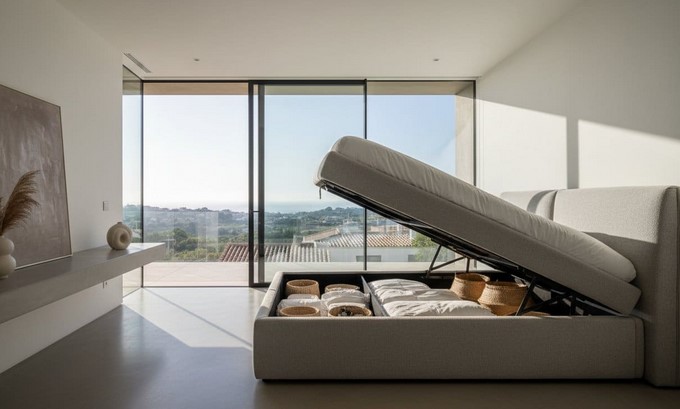
Source:https://bennettsbedrooms.com
Think about the last time you felt “stuck” in your bedroom. Maybe you were tripping over a box of winter coats in July, or perhaps your closet doors are bulging so much they barely latch. In the average 150-square-foot bedroom, nearly 30 square feet is occupied by a bed—and most people leave the space beneath it to the dust bunnies. That is roughly 20% of your room’s footprint acting as a “dead zone.”
Over my ten years in home improvement and spatial design, I have walked into countless homes where owners were ready to knock down walls to add a closet. My first move? I look under the bed. I call this the “hidden basement” of the bedroom. When utilized correctly, under-bed storage isn’t just a place to hide junk; it is a high-performance logistics hub that can breathe new life into a cramped floor plan.
The “Hidden Basement” Philosophy
When we talk about maximizing real estate, we often look for vertical height or expensive additions. However, the space beneath your mattress is a horizontal gold mine. I like to use the “Suitcase Analogy”: If you were packing for a trip, you wouldn’t just throw clothes loosely into a trunk; you’d use organizers to fit everything perfectly. Your bedroom is the trunk, and the area under your bed is that extra expandable pocket you forgot you had.
In my early days as a contractor, I realized that the main reason people fail at storage is accessibility. If it’s hard to reach, you won’t use it. Strategic under-bed storage requires a balance of containment and ease of movement.
Selecting the Right Vessel: Materials and Mechanics
Not all storage containers are created equal. Depending on your flooring and what you intend to store, the technical specifications of your “vessel” matter immensely.
Plastic Bins vs. Breathable Fabric
For items that need protection from humidity—like old photo albums or electronics—sealed plastic bins are the industrial standard. They create a moisture barrier. However, for textiles like wool sweaters or spare linens, I always advocate for breathable fabric bags.
Plastic can trap minute amounts of moisture, leading to a musty “basement” smell on your favorite clothes. Fabric allows for air exchange while still acting as a barrier against dust and pests.
The Rolling Advantage: Casters vs. Sliders
If you have hardwood or laminate floors, you need containers with soft-tread casters. Dragging a heavy box across a finished floor is a guaranteed way to ruin your investment. For carpeted rooms, smooth-bottomed sliders or low-profile bins work best. The goal is to reduce “frictional resistance” so that retrieving your items doesn’t feel like a workout.
Technical Considerations: Height and Clearance
Before you go out and buy a fleet of bins, you must measure your vertical clearance. This is the distance from the floor to the lowest point of the bed frame (usually the side rail).
-
Standard Frames: Typically offer 6 to 8 inches of clearance.
-
Bed Risers: If you have less than 6 inches, you can use heavy-duty bed risers. These are small blocks that sit under the bed posts to give you an extra 2 to 3 inches of height.
-
Platform Beds with Built-in Drawers: These are the “luxury SUVs” of the storage world. They offer integrated cabinetry, but keep in mind they are permanent. If you move often, modular bins are more “logistically flexible.”
Tips Pro: Don’t forget to measure the distance between the bed legs. I’ve seen homeowners buy a long, beautiful storage trunk only to find it won’t fit between the middle support legs of their king-sized frame.
Zoning Your Storage: Seasonal vs. Frequent Use
In home improvement, we focus on “Workflow.” Just because something is under the bed doesn’t mean it should be buried. I recommend a Zoning Strategy based on the perimeter of the bed.
-
The “Live” Zone (Sides of the bed): Use this for things you need weekly, like extra towels or workout gear. These should be in easy-to-pull drawers or bins with handles.
-
The “Deep Archive” Zone (The center/head of the bed): This is for your Christmas decorations, tax documents, or summer camping gear. Since you only reach for these once or twice a year, it’s okay if they require a bit more effort to access.
Vacuum Sealing: The Space Multiplier
If you are storing bulky items like comforters or winter parkas, vacuum-sealed bags are a game changer. By removing the air (the “dead volume”), you can shrink a stack of blankets by up to 75%. This allows you to fit an entire guest bedroom’s worth of linens into a single 6-inch high bin.
Protecting Your Asset: Dust and Pests
The biggest I give my clients is about the “Dust Vortex.” Because air doesn’t circulate well under a bed, it becomes a magnet for dust and hair.
-
Lidded Containers Only: Never use open baskets under the bed. Within three months, everything inside will be covered in a fine layer of grey grit.
-
Cedar Blocks: If you are storing natural fibers like wool or silk, toss a few cedar blocks into your fabric bags. It’s a natural deterrent for moths and keeps things smelling fresh without the chemical scent of mothballs.
-
The “Six-Month Audit”: Every time the seasons change, pull everything out. Vacuum the floor, wipe down the tops of the bins, and ensure no moisture has accumulated.
Aesthetics: Keeping the Bedroom a Sanctuary
From a design perspective, seeing a bunch of plastic bins peeking out from under a bed can make a room feel “industrial” rather than “restful.”
The Role of the Bed Skirt
A well-tailored bed skirt (dust ruffle) is your best friend here. It acts as a visual “cloak” for your storage system. If you prefer a modern, minimalist look, choose a “tailored” skirt with clean pleats rather than a gathered, frilly one.
Decorative Trunks and Baskets
If you have a bed that sits high and you want the storage to be seen, look for woven seagrass trunks or wooden chests with casters. These add texture to the room while performing a vital organizational function. In my experience, a “visible” storage solution works best at the foot of the bed, where it can double as a bench.
Conclusion: Reclaiming Your Environment
We spend a third of our lives in the bedroom. It should be a place of recovery, not a place where you feel claustrophobic because of “stuff” you have nowhere to put. By implementing a strategic under-bed storage system, you are essentially “founding” new land within your own home.
It isn’t about hoarding more things; it’s about giving your belongings a proper “address” so that your living space stays clear for living. Stop letting those 30 square feet go to waste—grab a tape measure, check your clearance, and start reclaiming your hidden basement today.
What is the one thing in your closet right now that is taking up too much room? Could it find a new home in your “hidden basement” under the bed? Let me know your biggest storage struggles in the comments!