Hardening Perimeter Access: Ensuring Security with the Security Gate Latch
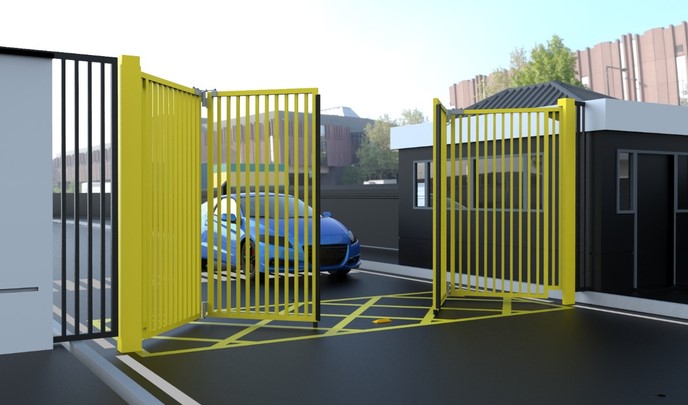
Source:https://cheshireindustrialdoors.com
I once got an urgent call from a homeowner who came home to find his side yard wide open and his expensive ride-on lawnmower missing from his unlocked storage shed. There were no broken fence boards, no cut padlocks, and zero signs of forced entry.
When I inspected his perimeter fence, the weakness was immediately clear: he had secured his 6-foot cedar gate with a basic, decorative gravity latch. Anyone walking down the alley could simply reach their hand over the top rail, lift the thin metal arm, and walk right in. It took a thief less than three seconds to bypass his entire perimeter defense.
We replaced that flimsy hardware with a heavy-duty, dual-sided locking security gate latch mounted to a structural post. In my over ten years of hands-on property hardening, perimeter fencing, and residential security upgrades, I’ve seen this exact oversight hundreds of times. Your fence is only as strong as its weakest point of access—and a gate without high-security latching hardware is nothing more than an open invitation.
The Physics of Perimeter Hardening: Why Standard Latches Fail
To understand why basic fence hardware falls short, you need to examine the mechanical vectors of a breach attempt. Standard gate latches are designed for convenience, not resistance to forced entry.
Think of a standard gravity latch like a basic door stopper—it holds the gate shut against the wind, but offers virtually no resistance to upward lifting, pry bars, or reach-over tampering. A purpose-built security gate latch, on the other hand, acts like a heavy-duty deadbolt on an exterior front door. It encases the strike pin inside a hardened steel housing that resists lifting, kicking, and lateral leverage forces.
       STANDARD GRAVITY LATCH                     SECURITY GATE LATCH
  (Vulnerable to Reach-Over & Prying)         (Encased, Deadlocked, Tamper-Proof)

         Reach-Over Motion                            Reach-Over Attempt
                |                                             |
                v                                             v
     +--------------------+                       +--------------------+
     | Open Lifting Arm   | ===> UNLOCKED!        | Enclosed Housing   | ===> BLOCKED!
     +--------------------+                       +--------------------+
     | Exposed Strike Pin |                       | Deadbolt Strike    |
     +--------------------+                       +--------------------+
Thermal Expansion and Post Movement
Wooden posts and metal gate frames move over time. Ground moisture, freeze-thaw cycles, and wood shrinkage cause gate gaps to widen or narrow throughout the year.
Standard latches lose catch engagement when a gate sags or pulls away by just half an inch. A professional security latch features wide tolerances and adjustable strike pins that absorb up to an inch of post movement without compromising locking engagement or structural security.
Deciphering Latch Architectures: Mechanical vs. Keyed vs. Digital Systems
Selecting the right hardware configuration depends on who needs access, how often the gate is used, and the level of perimeter security required.
+--------------------------------------------------------------------------+
|                     SECURITY LATCH MECHANISM TYPES                       |
|                                                                          |
|   +---------------------------------+  +------------------------------+  |
|   |    DUAL-SIDED KEYED CYLINDER    |  | MECHANICAL KEYLESS DIGITAL   |  |
|   |  * Key access from inside/out   |  |  * Keypad access on both sides|  |
|   |  * Deadbolt locking throw       |  |  * No keys to lose or copy   |  |
|   |  * Tamper-resistant cylinder    |  |  * Easy code resets for pros |  |
|   +---------------------------------+  +------------------------------+  |
+--------------------------------------------------------------------------+
1. Dual-Sided Keyed Cylinder Latches
Features a brass pin-tumbler lock cylinder on both the outside and inside faces of the gate.
-
Best For: Side yards, pool enclosures, and alleyway gates where you want to prevent anyone from reaching over the top rail to unlatch the gate.
-
Key Advantage: Keyed-alike capability allows you to match the gate key to your home’s main entry deadbolts.
2. Mechanical Keyless Digital Latches
Utilizes a heavy-duty push-button keypad housing made of weather-resistant zinc or stainless steel, operating completely without batteries or electrical wiring.
-
Best For: High-traffic service gates, dog-walking access, landscape contractor entrances, and families with kids who lose physical keys.
-
Key Advantage: Mechanical dependability that won’t fail during power outages or extreme sub-zero winter temperatures.
3. Magnetic & Self-Closing Safety Latches
Uses strong neodymium magnets to draw the latch bolt shut automatically as the gate swings closed.
-
Best For: Swimming pool enclosures and child safety perimeters where self-closing, self-latching compliance is mandated by law.
Technical Specifications: Material Grade & Security Ratings
Choosing the right metal alloy ensures your locking mechanism won’t rust shut, bind, or shear off under force.
| Material Grade | Corrosion Resistance | Shearing Strength | Ideal Environment |
| 316 Marine-Grade Stainless Steel | Superior (Saltwater Proof) | High ($1,500+\text{ lbs}$) | Coastal Areas & Pool Enclosures |
| Architectural Polymer (D&D Style) | Superior (Zero Rust) | High (Steel Core Reinforced) | Standard Residential Wood/Vinyl |
| Powder-Coated Malleable Iron | Moderate | High | Heavy Ornamental Wrought Iron |
| Stamped Zinc-Plated Steel | Low (Prone to Rust) | Medium | Not Recommended for Security |
Pro Tip: Never use light-duty zinc-plated wood screws to install a security latch. Always use heavy-duty stainless steel or hot-dipped galvanized through-bolts that pass completely through the fence post, secured with backing washers and nylon-insert lock nuts on the inside face.
Installation Protocol: Ensuring Alignment & Longevity
Installing a heavy-duty security gate latch requires careful layout work to handle gate sag and structural post settling.
+--------------------------------------------------------------------------+
|                     4-STAGE INSTALLATION WORKFLOW                        |
|                                                                          |
|   +-------------------+      +-------------------+      +------------+   |
|   | 1. Post & Hinge   | ---> | 2. Cross-Bore     | ---> | 3. Through-|   |
|   |    Check          |      |    Hole Drilling  |      |    Bolt    |   |
|   +-------------------+      +-------------------+      |    Mounting|   |
|                                                         +------------+   |
|                                                                |         |
|                                                                v         |
|                              +-------------------+      +------------+   |
|                              | 5. Final Strike   | <--- | 4. Anti-Sag|   |
|                              |    Alignment      |      |    Cable   |   |
|                              +-------------------+      +------------+   |
+--------------------------------------------------------------------------+
Step 1: Structural Post and Hinge Reinforcement
Before installing a new latch, inspect the gate hinges and latch post. If the gate sags or rubs against the ground, no latch will operate smoothly. Install a diagonal steel turnbuckle cable or anti-sag kit on the gate frame, and tighten all hinge fasteners into solid structural framing.
Step 2: Precision Cross-Bore Drilling
For dual-sided locks, use a speedbor spade bit or hole saw to drill a clean, level cross-bore hole through the fence post or gate upright. Use a torpedo level to ensure the connecting spindle passes straight through without binding against the wood grain.
Step 3: Installing Anti-Tamper Shrouds
Mount an anti-reach protective shroud or metal security plate over the latch mechanism on the inside of the gate. This blocks tools, wire coat hangers, or hands from slipping through the gap between the gate frame and the fence post.
Expert Advice: Hidden Pitfalls to Avoid
Even heavy-duty security hardware will fail if you overlook these two critical installation details:
Hidden Pitfall 1: Leaving Large Gaps Between Gate Frame and Post
If the gap between your gate frame and the lock post is wider than $3/4\text{ inch}$, a intruder can insert a small crowbar or hydraulic jack to pop the latch pin right out of its catch plate. Keep gate gaps tight (between $1/4\text{ inch}$ and $1/2\text{ inch}$), or install a thick steel security gap-cover plate along the entire vertical edge of the gate.
Hidden Pitfall 2: Neglecting the Gate Stop
A security latch is designed to keep a gate locked, not to absorb the slamming force of a 150-pound gate blown shut by a windstorm. Always install a solid wood or steel gate stop block on the post. The stop block takes the kinetic impact of the closing gate, protecting the delicate internal locking pins from shearing over time.
Secure Your Property Boundary with Confidence
Hardening your home’s perimeter doesn’t mean building an unsightly fortress—it means eliminating easy points of failure. Swapping out a weak, sagging latch for a dual-sided, heavy-duty security gate latch gives you complete control over who enters your yard while preserving your property’s curb appeal.