Professional Interior Branding: Ensuring Adhesion with Wallpaper Paste Glue
October 25, 2026
No Comments
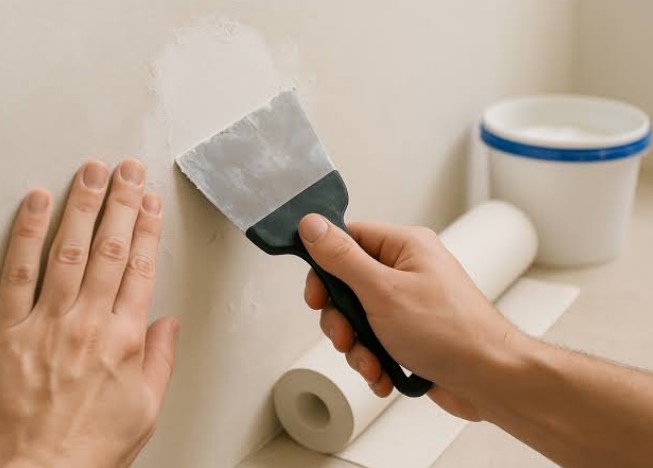
Source:https://www.hemlockpainting.com
Imagine stepping into a newly renovated luxury boutique or an executive boardroom just three weeks after a major interior overhaul, only to spot a glaring defect: a seam along a $250-per-roll bespoke wallcovering is lifting, curling outward, and exposing raw drywall beneath. What was meant to be a flagship statement of professional branding instantly looks cheap, neglected, and poorly executed.
In my more than ten years of managing high-end interior build-outs and residential transformations, I have seen this precise nightmare unfold time and again. Property owners and interior designers often spend tens of thousands of dollars sourcing hand-printed textiles, embossed vinyl, and non-woven papers, yet treat the underlying wallpaper paste glue as a mere commodity line item.
Failing to respect the chemical dynamics of your wallcovering adhesive guarantees eventual blistering, seam separation, or permanent substrate damage. Mastering the selection and application of professional wallpaper paste glue is the single most critical factor in achieving flawless, long-lasting interior branding.
The Chemistry of Bonding: Why Wallpaper Paste Glue Is the Unsung Hero
Many beginners assume that wallpaper adhesive works like standard craft glue—simply tacking a sheet of paper to a painted wall. In reality, modern wallcoverings are engineered structural skins that expand when wet, contract as they dry, and exert continuous lateral tension on the wall surface.
Think of your decorative wallcovering as the exterior shell of a high-performance aircraft, while the wallpaper paste glue acts as the resilient structural adhesive holding that skin to the airframe. If the adhesive lacks the correct shear strength or moisture resistance, ambient humidity swings and thermal expansion will cause the skin to buckle, bubble, or sheer away from the wall.
 [ Decorative Wallcovering ]  ◄── Expands/Contracts with Room Humidity
             │
             ▼
 [ Wallpaper Paste Glue ]     ◄── Flexible, High-Tack Shearing Layer
             │
             ▼
   [ Sizing / Wall Primer ]   ◄── Sealed Vapor & Mechanical Barrier
             │
             ▼
    [ Drywall Substrate ]     ◄── Porous Gypsum Core
Formulating a successful bond requires balancing four critical physical properties:
-
Initial Tack: The immediate grip strength that holds heavy wallcovering sheets in place on vertical surfaces before drying.
-
Open Time and Slip: The window of time the adhesive stays wet, allowing installers to slide sheets laterally across the wall to align complex pattern matches perfectly.
-
Dimensional Stability: The ability of the cured adhesive matrix to resist the strong tensile forces exerted by shrinking paper fibers during the drying cycle.
-
Strippability: The engineered shear failure point that allows future removal of the wallcovering without tearing open the underlying drywall paper.
Matching Adhesive Formulations to Your Specific Wallcovering Type
Selecting the right wallpaper paste glue is not a one-size-fits-all decision. The weight, porosity, and backing material of your wallcovering dictate the exact chemistry required for a permanent bond.
1. Clear Cellulose & Starch-Based Adhesives
Clear adhesives are light- to medium-duty formulas typically made from modified wheat starch or methyl cellulose. They dry completely transparent, making them forgiving for beginners working with delicate papers, unbacked non-woven wallcoverings, and light silks where adhesive squeeze-out might stain face fibers.
2. Heavy-Duty Clay-Based Adhesives
Commercial interior branding frequently utilizes heavy commercial vinyl, embossed foils, and dense woven textiles. These non-porous materials require a heavy-duty clay wallpaper paste glue. Formulated with high solids content, clay adhesives offer maximum initial tack, low water content, and extreme shear strength to hold heavy, thick materials permanently without sagging.
3. Premixed Vinyl-Over-Vinyl Adhesives
When installing decorative borders, metallic trims, or layering decorative films directly over existing non-porous vinyl surfaces, standard water-based pastes will fail because water cannot evaporate through vinyl. Specialized vinyl-over-vinyl adhesives contain aggressive synthetic polymers designed to cure through chemical bonding rather than simple air drying.
Substrate Preparation: Building the Foundation for Wallpaper Paste Glue
Even the most advanced wallpaper paste glue cannot adhere to a chalky, unprimed, or dusty wall. Proper wall priming—often called “sizing”—is an absolute prerequisite for professional installations.
┌─────────────────────────────────────────────────────────┐
│            WALL PREPARATION PROTOCOL                    │
└─────────────────────────────────────────────────────────┘
  1. Patch all gouges and sand drywall smooth.
  2. Wipe down surface to eliminate all gypsum dust.
  3. Apply 100% acrylic wallcovering primer/sizer.
  4. Allow primer to cure for 24 hours.
  5. Apply wallpaper paste glue evenly with a 3/8" nap roller.
Applying a dedicated acrylic wallcovering sizing primer serves a dual purpose: it seals the porous gypsum board so it doesn’t prematurely suck moisture out of your wallpaper paste glue, and it creates a hard, uniform anchor layer that allows for smooth repositioning during installation.
Formula Performance Breakdown: Comparing Wallpaper Adhesives
Selecting the proper adhesive requires balancing open time, tack strength, and material weight limits.
| Performance Metric | Clear Cellulose Paste | Heavy-Duty Clay Paste | Premixed Light Weight | Wheat Starch Powder |
| Initial Tack Strength | Moderate | High to Extreme | Moderate | Low to Moderate |
| Open Time / Slip | Long (15–20 Mins) | Moderate (10–15 Mins) | Moderate (10–12 Mins) | Long (20+ Mins) |
| Best Material Match | Non-Woven, Light Paper | Heavy Vinyl, Fabrics | Standard Residential | Fine Papers, Grasscloth |
| Stain Risk (Face Side) | Very Low (Dries Clear) | Moderate (Clay Residue) | Low | Very Low |
| Removal Method | Strippable / Water-Soluble | Requires Steaming/Scraping | Strippable | Water-Soluble |
Step-by-Step Pasting and “Booking” Mechanics
Achieving a flat, bubble-free wall finish requires mastering the physical application technique, including a crucial step known in the trade as “booking.”
      PASTE APPLICATION                  THE "BOOKING" TECHNIQUE

  ┌────────────────────────┐         ┌────────────────────────┐
  │                        │         │   Pasted Side Folded   │
  │  Apply Paste Evenly    │         │   Inward Top-to-Center  │
  │  from Center Outward   │         ├────────────────────────┤
  │                        │         │   Pasted Side Folded   │
  └────────────────────────┘         │  Inward Bottom-Center  │
                                     └────────────────────────┘
                                     (Relaxes Paper / Activates Glue)
-
Apply Uniform Coverage: Roll a smooth, generous coat of wallpaper paste glue over the back of the strip using a short-nap paint roller, working from the center outward to the edges to avoid pooling.
-
Book the Wallcovering: Fold the pasted top half down to the center, and the bottom half up to the center—pasted side to pasted side—without creasing the outer folds.
-
Allow Dwell Time: Let the booked strip sit undisturbed for 5 to 10 minutes. This essential step allows the moisture in the wallpaper paste glue to penetrate and relax the paper fibers evenly before it hits the wall, preventing post-installation expansion bubbles.
Expert Advice: Field Insights and Critical Warnings
Over a decade of installing commercial wallcoverings has taught me several field-tested rules that prevent disastrous call-backs.
1. Pro Tip: The Dual Seam-Roller Method
Never push hard on a wooden seam roller over fresh joints to force down lifting edges. Over-rolling squeezes all the wallpaper paste glue out from under the seam, leaving a bone-dry joint that will pop open two weeks later. Apply light, even pressure with a soft flexible roller, and wipe away excess glue immediately with a damp cellulose sponge.
2. Pro Tip: Use the “Paste-the-Wall” Technique for Non-Woven Sheets
Modern non-woven wallcoverings do not expand when wet. Save hours of labor by applying your wallpaper paste glue directly to the wall surface using a paint roller rather than pasting the back of the paper. This keeps your work table clean and dramatically speeds up pattern alignment.
⚠️️ The “Unsealed Drywall Trap” (Hidden Warning)
Never apply wallpaper paste glue directly onto raw drywall or flat builders’ latex paint. The aggressive water content in heavy-duty adhesives will saturate the drywall face paper. When you or a future tenant attempt to strip the wallpaper years down the road, the glue will tear the sheetrock paper right down to the chalky core, resulting in thousands of dollars in wall repairs! Always seal walls with a specialized acrylic wallcovering primer first.
A successful interior branding transformation relies on attention to foundational details. By pairing your designer wallcovering with the correct wallpaper paste glue, properly prepping your substrate with acrylic sizing, and honoring technical booking times, you guarantee an immaculate, commercial-grade finish that withstands years of daily traffic.
Are you currently planning a commercial space redesign or tackling a challenging residential wallpaper project? Share your wallcovering materials, substrate questions, or technical challenges in the comments below—I would love to help you optimize your installation strategy!