High-End Landscape Branding: Elevating Property Value with the Stone Path
September 5, 2026
No Comments
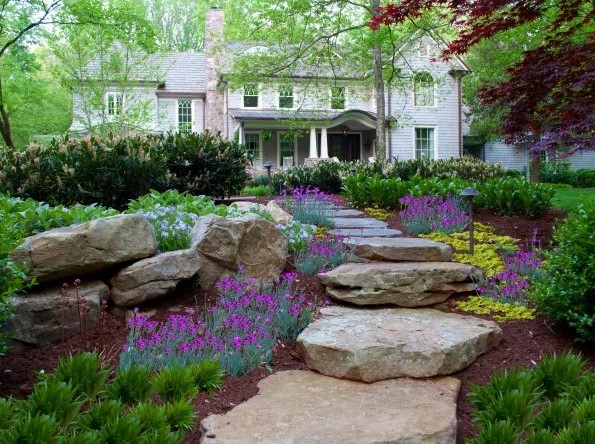
Source:https://diy.sndimg.com
A few springs ago, I was invited to appraise a historic property in Connecticut that had been lingering on the market for over six months. The interior was pristine—custom millwork, granite counters, and updated HVAC. Yet, prospective buyers kept turning around at the front gate. The issue wasn’t the house itself; it was the soggy, ill-defined mud track cutting across the lawn, forcing guests to tip-toe carefully just to reach the front porch.
We brought in a crew, excavated eight inches of unstable topsoil, laid down a geotextile membrane, and installed a sweeping, hand-chiseled bluestone walkway. Two weeks later, the house sold for 12% over its original asking price.
In my decade of managing hardscape installations and outdoor renovations, I have seen homeowners dump tens of thousands of dollars into indoor finishes while neglecting their yard’s primary circulatory system. Installing a professionally engineered stone path is not merely a garden luxury; it is a strategic landscape branding move that establishes immediate curb appeal, guides pedestrian traffic, and delivers tangible long-term real estate equity.
The Psychology of Outdoor Circulation: First Impressions & Value
Landscape designers evaluate outdoor spaces through “visual anchors” and “transitional flow.” The moment someone steps onto your property, their eyes instinctively seek a clear, inviting route to the primary entryway.
Think of a unguided, open lawn like a website without a navigation bar. Without a defined walkway, visitors feel hesitant, confused, and prone to taking unnatural detours that wear down your turf.
+-------------------------------------------------------------+
|               HARDSCAPE ROI & IMPACT METRICS                |
+-------------------------------------------------------------+
| Feature           | Poured Concrete     | Stone Path        |
+-------------------+---------------------+-------------------+
| Expected Lifespan | 15 – 25 Years       | 50 – 100+ Years   |
| Maintenance Load  | Sealing / Crack Fix | Minimal Pointing  |
| Aesthetic Value   | Utility / Industrial| Timeless Premium  |
| Equity Yield      | Moderate (50-60%)   | High (70-85%+)    |
+-------------------+---------------------+-------------------+
Curb Appeal and Appraised Equity
A well-crafted walkway built from natural flagstone, granite, or slate elevates the entire exterior aesthetic. Real estate appraisers recognize natural stone as a permanent structural improvement, unlike poured concrete or asphalt, which crack, spall, and degrade under seasonal temperature swings.
Material Selection: Matching Stone Chemistry to Your Microclimate
Not every stone belongs in every climate. Choosing the wrong geology for your region leads to premature crumbling, dynamic shifting, or slick walking surfaces during rain.
       [ GEOLOGICAL SUBSTRATE EVALUATION ]
                        │
        ┌───────────────┴───────────────┐
        ▼                               ▼
[ Freeze-Thaw Climates ]       [ Warm / Arid Climates ]
        │                               │
        ▼                               ▼
 Dense Bluestone / Granite       Travertine / Sandstone
 (Low Absorption, Frost-Proof)   (Heat-Reflective, High Texture)
High-Density Igneous & Metamorphic Stones
-
Bluestone & Slate: Highly dense, fine-grained metamorphic rocks. Excellent for northern climates because their low absorption rates make them resistant to frost heave and spalling.
-
Granite Pavers: The gold standard for mechanical durability. Granite resists acid rain, severe foot impact, and heavy snowplow friction without losing surface traction.
Porous Sedimentary Stones
-
Limestone & Travertine: Beautiful, warm-toned sedimentary stones perfect for sunny southern backyards. Travertine remains cool under foot in direct sunlight, though highly porous varieties must be sealed in high-moisture zones.
-
Sandstone (Flagstone): Offers rich natural grain variations and excellent slip resistance, though softer slabs can split along bedding planes if water penetrates and freezes inside.
Foundation Engineering: The Sub-Base Blueprint
The longevity of any walkways rests entirely on what lies beneath the surface. Laying stone directly over dirt or a thin layer of sand is an absolute recipe for structural failure.
+-------------------------------------------------------------+
|                CROSS-SECTION SUB-BASE LAYOUT                |
+-------------------------------------------------------------+
| [ TOP LAYER ]    : Natural Stone Pavers (1.5" - 2" Thick)   |
| [ LEVELING BED ] : Polymeric Sand / Sharp Concrete Sand (1")|
| [ BASE LAYER ]   : Crushed Aggregate / Dense Grade (4"-6")  |
| [ SUB-GRADE ]    : Geotextile Fabric over Compacted Soil    |
+-------------------------------------------------------------+
Dry-Laid vs. Wet-Laid Systems
-
Dry-Laid Systems (Flexible): Stones sit on a compacted crushed stone and sand bed with permeable joints. Excellent for areas subject to freeze-thaw cycles, as the individual stones flex slightly with thermal movement without cracking.
-
Wet-Laid Systems (Rigid): Stones are mortared onto a poured reinforced concrete slab. This creates an elegant, seamless walkway ideal for formal entrances, though it requires deep footings below the frost line to prevent cracking.
Step-by-Step Installation Protocol
Building a durable, safe, and stunning pathway requires methodical excavation, compaction, and precise slope management.
+-------------------------------------------------------------+
|                  INSTALLATION WORKFLOW                      |
+-------------------------------------------------------------+
| [ STEP 1 ] Excavate Sub-Base (8"-10" Deep) & Set Slope      |
| [ STEP 2 ] Lay Geotextile Fabric & Compact Aggregate Base   |
| [ STEP 3 ] Screed Leveling Sand & Lay Stone Units           |
| [ STEP 4 ] Sweep Polymeric Sand & Activate with Water       |
+-------------------------------------------------------------+
-
Excavation & Slope Drainage: Dig out the path area to a depth of 8 to 10 inches. Ensure a pitch slope of at least 1/4 inch per linear foot away from your home’s foundation to prevent water pooling.
-
Geotextile Separation: Lay down a heavy-duty woven geotextile fabric over the compacted soil subgrade. This prevents fine clay and dirt particles from migrating upward into your gravel base over time.
-
Aggregate Base Compaction: Fill the trench with 4 to 6 inches of dense-graded crushed stone (often called road base or crusher run). Compact the base thoroughly using a mechanical plate compactor in two-inch lifts.
-
Setting & Jointing: Spread a 1-inch leveling bed of sharp sand. Set your stone units, ensuring uniform top-surface heights with a rubber mallet and spirit level. Sweep high-performance polymeric sand into the joints and mist with water to lock the stones permanently into place.
Pro Tip: When laying a stepping-stone path across a lawn, set the top surface of the stones roughly 1/2 inch below the surrounding soil level. This allows your lawnmower blades to glide right over the stones without striking the edges, saving you from endless string-trimming work.
Hidden Warning: Never use standard play sand or mason sand to fill the joints between dry-laid stones. Unbound fine sand washes away during the first thunderstorm, inviting weed seeds, ants, and moisture accumulation that undermines your base. Always use polymeric jointing sand or crushed granite dust.
Maintenance and Seasonal Preservation
A properly engineered natural walkway requires minimal ongoing maintenance, but routine care protects its rich colors and structural stability.
-
Spring Wash: Scrub the surface using a stiff-bristle brush and a pH-neutral cleaner to remove organic tannins, moss, and winter salt residue.
-
Joint Inspection: Inspect jointing sand every two years. Touch up any depleted joint areas with polymeric sand to block weed germination and prevent washouts.
-
Sealing Strategy: While high-density stones like granite don’t strictly require sealers, applying a breathable, penetrating stone sealer every 3 to 5 years protects softer sandstones from oil stains and chemical weathering.
Investing in Structural Beauty
Transforming your yard with a thoughtfully designed stone path bridges the gap between raw landscape architecture and refined residential luxury. By pairing proper sub-base engineering with high-grade natural materials, you construct a permanent visual feature that elevates your daily outdoor experience while securing your property’s market value for decades to come.
What material are you considering for your outdoor walkways? Are you planning a flexible dry-laid garden path or a formal mortared entry? Share your ideas, questions, or project challenges in the comments section below!