Enhancing Residential Security: Physical Access Control via the Door Chain Lock
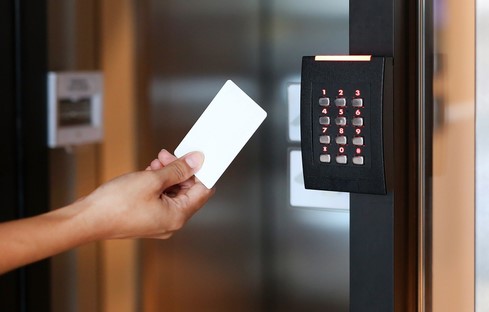
Source:https://facilitiesmanagementadvisor.com
It is 11:00 PM. Someone knocks on your front door. You aren’t expecting guests, and your peephole only gives you a distorted, fish-eye view of a shadowy figure holding a clipboard. In that split second, your brain calculates the risk: do you open the door and expose your entire household to a potential intruder, or do you keep it shut and risk ignoring a legitimate emergency? This is the exact moment where a simple, well-installed Door Chain Lock transforms from a piece of hardware into a vital psychological and physical boundary.
In my fifteen years of auditing residential security, I’ve seen homeowners spend thousands on high-tech smart cameras while neglecting the “Last Line of Defense.” A camera only records a crime; a physical barrier prevents it. When I install a chain lock for a client, I’m not just drilling holes; I’m creating a “buffer zone.” It is the only security device that allows for human interaction without total physical vulnerability.
The Strategy of the Buffer Zone
Most beginners view security as a binary: the door is either locked or it’s open. In the professional world of access control, we talk about “Tiered Security.” The Door Chain Lock is your middle tier. It provides just enough space to verify an identity or receive a small package, but not enough space for a shoulder to force its way through.
I remember a project for a client living in a high-traffic urban apartment. They had a massive deadbolt, but they felt terrified every time a delivery driver knocked. We installed a heavy-duty, reinforced chain lock. Two weeks later, they called to tell me it had stopped a “distraction burglary” attempt. The intruder tried to push past when the door cracked open, but the chain held firm, giving the homeowner the three seconds they needed to slam the door and engage the deadbolt.
Think of a chain lock like the “safety catch” on a high-end firearm. It’s a deliberate, mechanical step that prevents an accidental—or forced—opening. It buys you the most valuable commodity in home defense: Time.
Engineering the Hold: Technical Specs for Success
If you buy the cheapest $5 zinc-plated chain from a bargain bin, you aren’t buying security; you’re buying a false sense of peace. To ensure your Door Chain Lock actually holds under pressure, you need to understand the metallurgy and the mechanics.
1. Materiality and Tensile Strength
-
Case-Hardened Steel: This is non-negotiable. Standard steel can be snipped with heavy-duty wire cutters. Case-hardened steel is designed to resist cutting and high-impact force.
-
Welded Links: Look closely at the chain. If the links are just bent into circles, they will “unfold” under a shoulder strike. High-security chains have each link individually welded shut.
2. The Rail and Slide Mechanism
-
The Track: The part that attaches to the door should be long enough to allow for a smooth slide but deep enough that the chain “plug” cannot be wiggled out from the outside by a clever intruder using a rubber band (a common bypass trick I’ve seen in the field).
-
The Plug: This is the T-shaped piece at the end of the chain. It should be solid brass or steel, not hollow pot metal.
3. Essential LSI Keywords to Know:
-
Strike Plate: The reinforced metal plate where the lock interacts with the door frame.
-
Kick-In Resistance: The measure of how much force a door assembly can take before the wood splits.
-
Pilot Holes: Small holes drilled before the screws to prevent the door frame from cracking.
-
Throw: The distance a bolt or plug travels to engage the lock.
Mastering the Install: The Expert’s Blueprint
A Door Chain Lock is only as strong as the wood it is attached to. I’ve seen 300-pound chains fly off the wall because they were held in by half-inch craft screws.
Step 1: Long-Screw Integration
The screws that come in the box are usually 1 inch long. Throw them away. To reach the actual structural “stud” behind the door casing, you need 3-inch hardened steel screws. When you anchor the chain to the wall side, those screws need to bite into the 2×4 framing, not just the decorative trim.
Step 2: Optimal Height Placement
Don’t install the lock at waist height. Why? Because a kick or a shoulder strike delivers the most force to the middle and bottom of the door. I always install the Door Chain Lock about 6 inches above the door handle. This puts the tension closer to eye level, making it harder for an intruder to use their body weight to “snap” the chain.
Step 3: The Tension Test
Once installed, engage the chain and push the door open. The chain should be taut enough that a hand cannot reach through and slide the plug out, but loose enough that you can speak clearly to whoever is on the other side.
Expert Advice: The “Hidden Warning” of Wood Split
Pro Tip: The Grain Direction Trap
I’ve seen DIYers install the rail perfectly, but the first time they tested it, the wood of the door split right down the middle.
Peringatan Tersembunyi (Hidden Warning): If you drive large screws into a narrow door stile without drilling proper Pilot Holes, you are creating a “wedge” that wants to split the wood along the grain. The Solution: Use a drill bit that is slightly smaller than the core of your screw. This allows the threads to bite without the shaft of the screw acting like a wood-splitter. Also, avoid placing all screws in a perfectly straight vertical line; stagger them slightly to distribute the stress across different “veins” of the wood.
The ROI of Physical Access Control
In high-end residential security, we often get distracted by “The Internet of Things.” But Wi-Fi can fail, batteries can die, and hackers can bypass software. The Door Chain Lock is a purely mechanical, “analog” solution. It requires no power and has no “backdoor” code.
Think of it as low-cost insurance. For a $20 investment in a high-grade lock and twenty minutes of labor, you increase your home’s “Defensive Depth” significantly. It signals to any observer that this home is occupied by someone who understands the principles of physical access control.
Maintenance: The “Smooth Slide” Checklist
-
Lubrication: Once a year, apply a tiny drop of dry graphite or silicone spray to the slide track. Avoid WD-40, as it attracts dust and will eventually make the chain “sticky.”
-
Screw Check: Because doors slam and houses settle, screws can vibrate loose. Give them a quarter-turn with a screwdriver every six months to ensure they are still biting into the studs.
-
Link Inspection: Look for any “stretching” in the links. If the chain looks elongated, it has likely taken a hit or a heavy pull and should be replaced to maintain its integrity.
Conclusion: Securing Your Peace of Mind
The front door is the “handshake” of your home, but that doesn’t mean you have to invite everyone in. By mastering the installation and use of a Door Chain Lock, you are taking a decisive step in systematic home improvement. You are moving from a state of passive hope to active protection.
Security isn’t about being afraid; it’s about being prepared. When that midnight knock comes, you won’t feel vulnerable. You’ll feel in control, knowing there is a case-hardened steel barrier standing between your family and the unknown.
Does your front door feel like a solid barrier, or is it the “weak link” in your home security? I’ve worked with everything from century-old oak doors to modern composite entries. If you’re worried about your door frame being too thin or too brittle for a standard install, I can help you find the right anchoring solution. Would you like me to create a “Home Security Layering Guide” to see how a chain lock fits into your overall protection plan?