Enhancing Commercial-Grade Outdoor Spaces: Strategic ROI of the Outdoor Bistro Set
Source:https://www.intelligentliving.co
You have exactly seven seconds. That is the average time a pedestrian takes to decide whether to walk into your café or keep strolling. I’ve stood on sidewalks with a stopwatch in hand, watching potential customers glance at a patio. If the furniture looks flimsy, rusted, or awkwardly spaced, they move on. In the hospitality and real estate industry, an empty patio isn’t just a missed opportunity; it’s “silent” lost revenue.
Over my decade in the home and commercial improvement trenches, I’ve seen business owners spend $50,000 on an interior remodel while treating their exterior like an afterthought. I’m here to tell you that the humble Outdoor Bistro Set is actually your most powerful tool for maximizing “Return on Square Footage.” It is the surgical instrument of outdoor design—small enough to fit anywhere, yet impactful enough to double your seating capacity and your curb appeal.
The “Sidewalk Magnet” Effect: Psychology of Seating
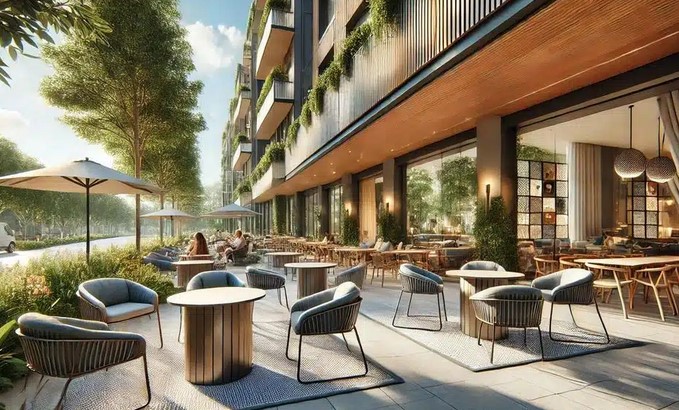
When we talk about an Outdoor Bistro Set, we aren’t just talking about a table and two chairs. We are talking about human psychology. A bistro set acts as a “Social Signal.” It tells passersby that your establishment is active, welcoming, and vibrant.
In my experience, a vacant patio feels like a “dead zone,” but even a single, well-placed bistro set creates a sense of place. I call this the “Campfire Analogy”: people are naturally drawn to areas that look like they are designed for human interaction. Just as a small campfire provides warmth and a focal point in a vast forest, a bistro set provides a destination in a vast outdoor space.
Material Logistics: Durability vs. Maintenance Costs
In a commercial-grade setting, the “residential” rules don’t apply. Your furniture will face a level of “mechanical stress” that would destroy a standard backyard set within months. You need to think about your Outdoor Bistro Set as an industrial asset.
Powder-Coated Aluminum: The All-Weather Champion
If you are looking for the best ROI, powder-coated aluminum is my go-to recommendation. It is lightweight enough for staff to move during closing time, yet it won’t rust—even in coastal environments with high salt spray. Unlike iron, it doesn’t leave “rust rings” on your expensive stone pavers, which can save you thousands in professional floor cleaning.
High-Density Polyethylene (HDPE) and Teak
For a more “organic” feel, many of my clients eye teak or wood. While beautiful, teak requires a maintenance schedule that most small businesses can’t maintain. Instead, look for HDPE lumber. It mimics the look of wood but is made from recycled plastics. It’s “through-colored,” meaning scratches don’t show, and it’s heavy enough to stay put during a sudden gust of wind.
Spatial Engineering: Maximizing Seating Density
The beauty of the Outdoor Bistro Set lies in its “footprint-to-profit” ratio. A standard bistro table is usually 24 to 30 inches in diameter. In the same space required for one large 4-top table, I can often fit two or three bistro sets.
The “Aisle Flow” Logic
In any commercial space, the “Fire Code” and “Flow Logistics” are non-negotiable. You need a minimum of 36 inches of clearance for major walkways. Because bistro sets are compact, they allow you to utilize “marginal space”—those narrow strips of sidewalk or balcony that would otherwise be wasted.
The Power of the “Triangle” Layout
Instead of lining sets up in a straight, boring row (which feels like a waiting room), I suggest a staggered triangle layout. This increases the “perceived privacy” for your guests while maintaining the same density. It creates a “micro-environment” for each couple, making them stay longer and, subsequently, spend more.
Tips Pro: Always check the “Feet” of your furniture. In a commercial setting, I only install sets with adjustable nylon glides. Outdoor surfaces are rarely perfectly level. A wobbly table is the fastest way to irritate a customer and cause a spill that leads to an insurance claim.
Technical Standards: Safety and Weight Load
When selecting an Outdoor Bistro Set for a commercial-grade space, you must look at the BIFMA (Business and Institutional Furniture Manufacturers Association) standards. This isn’t just “red tape”—it’s asset protection.
-
Weight Capacity: Commercial chairs should be rated for at least 300 to 350 lbs.
-
UV Degradation: Ensure the finish is UV-rated for at least 3,000 hours of direct sunlight. Cheap plastic sets will become “brittle” and snap under pressure after one season of sun exposure.
-
Stackability: In the hospitality world, time is money. If your staff spends 20 minutes “jigsaw-puzzling” furniture into a storage shed every night, you are losing labor hours. Look for stackable bistro chairs that can be cleared in under five minutes.
Aesthetic Cohesion: Branding Your Outdoor Asset
Your Outdoor Bistro Set should be an extension of your interior brand. If you have a rustic, “farm-to-table” interior, a sleek neon-colored metal set will create “visual dissonance.”
Color Theory and ROI
-
Bright Colors (Yellow, Red, Teal): These act as a “visual shout.” They are great for high-traffic “Fast Casual” spots because they attract attention from a distance.
-
Neutral Tones (Black, Charcoal, Navy): These suggest “Premium” and “Fine Dining.” They encourage guests to linger, which is ideal if your business model relies on high-margin appetizers and drinks.
Beware of “Black Metal” in direct sunlight. I’ve seen guests literally get burned by chairs that have been sitting in the 3 PM sun. If your patio doesn’t have an awning or umbrellas, stick to lighter finishes like “Silver” or “Slate” to reduce heat absorption.
Integrating Comfort: The “Stay Longer” Strategy
Efficiency doesn’t mean discomfort. If a chair is uncomfortable, a guest will leave after 15 minutes. To maximize the ROI of your Outdoor Bistro Set, you need to think about ergonomics.
Seat Contouring and Pitch
A flat metal seat is a torture device. Look for chairs with a contoured seat and a slight “pitch” (a backward tilt of about 3 to 5 degrees). This shifts the guest’s weight to their thighs and back rather than their tailbone.
The Umbrella Integration
If your bistro tables don’t have an umbrella hole, you are limiting your “Operational Hours.” On a hot day, a table without shade is a table that generates $0 in revenue. I always recommend 1.5-inch diameter holes as the industry standard for commercial-grade umbrellas.
Conclusion: Turning Pavement into Profit
In the world of home and commercial improvement, we often look for the “big win”—the massive addition or the total overhaul. But after ten years of seeing what actually moves the needle, I’ve realized that the Outdoor Bistro Set is the most efficient way to expand your vertical and horizontal real estate.
It is a low-cost entry with a high-impact return. It turns “dead” sidewalks into “live” revenue streams and transforms an empty storefront into a community landmark. Don’t let your outdoor space sit idle. Measure your clearance, check your BIFMA ratings, and start building your “sidewalk magnet” today.
What is the current “unused” corner of your property? Could a strategic bistro set turn that empty patch of concrete into your guests’ new favorite spot? Let’s discuss your patio layout in the comments below!