Industrial Drilling Precision: Scaling Versatility with the Bit Set Drill
Source:https://jinootools.com
I once watched a passionate homeowner try to mount a heavy timber ledger board to a solid concrete basement wall using a standard twist drill bit meant for soft pine. Within thirty seconds, the drill chuck was smoking, the metal tip of the bit had literally melted into a smooth, useless nub, and the drill motor was screaming in agony. It was a classic, frustrating standstill. The project ground to a halt not because the power tool lacked muscle, but because the cutting edge was completely mismatched for the substrate.
In my 10+ years of working across residential and commercial construction sites, I’ve seen this exact bottleneck break the momentum of countless intermediate builders. Beginners often spend all their resources on buying the most expensive, high-torque brushless drill on the market, but they treat their cutting accessories like an afterthought. Real operational efficiency happens at the exact millimeter where metal meets material. If you want to scale up your project capabilities from basic wood assembly to industrial-grade masonry and metal fabrication, investing in a comprehensive, high-quality bit set drill system is your ultimate power move.
The Geometry of Cutting: Why One Size Never Fits All
To understand how a professional bit set drill unlocks project versatility, we have to look at the physics of material displacement. Different materials don’t just require different speeds; they require entirely different mechanical cutting geometries.
Think of your drill bits like a collection of specialized chef’s knives. You wouldn’t use a delicate, serrated bread knife to cleave through a dense beef bone, nor would you use a heavy meat cleaver to finely slice a soft tomato. Using the wrong drill bit on an unyielding substrate like stainless steel or cinder block creates immense friction, which transforms into destructive heat almost instantly.
     Twist Bit                Brad Point               Masonry Bit
 (Metal / General)             (Wood Only)          (Concrete / Stone)
       ┌───┐                      ┌───┐                   ┌───┐
       │ ╲ │                      │ █ │                   │ ▀ │
       └───┘                      └───┘                   └───┘
 [118° Split Point]         [Sharp Center Spur]     [Carbide Spade Tip]
A professional-grade kit balances this equation by organizing highly specialized geometries into a unified workspace. It allows you to pivot seamlessly between wood, plastics, non-ferrous metals, and structural masonry without punishing your power tools or ruining your workpieces.
Technical Specifications: Anatomy of a High-Performance Bit Matrix
When you start browsing for a comprehensive bit set drill array, you need to look past the branding and analyze the core metallurgy and engineering designs.
| Bit Category | Core Metallurgy / Coating | Tip Angle & Geometry | Target Substrate |
| HSS (High-Speed Steel) | Bare steel or Titanium Nitride ($TiN$) | $118^\circ$ to $135^\circ$ Split Point | Mild steel, aluminum, hardwoods, plastics |
| Cobalt ($M42$ / $M35$) | 5% – 8% Cobalt alloy blend | $135^\circ$ Heavy-Duty Split Point | Stainless steel, cast iron, high-tensile alloys |
| Brad Point | Polished carbon tool steel | Center spur with twin outer cutting spurs | Clean cabinet wood boring, minimizes grain tearing |
| Masonry Impact | Premium Carbon Steel with Carbide tip | Wide, brazed diamond-ground spade | Concrete, brick, stone, mortar blocks |
The Magic of the $135^\circ$ Split Point
Standard, cheap twist bits usually feature a $118^\circ$ angle tip. When you press these onto a smooth sheet of metal, the bit likes to “walk” or skate across the surface, scratching your material before it finally catches. Premium sets upgrade you to a $135^\circ$ split point. This design bites into the material instantly upon contact, eliminating the need for a center punch and keeping your drilling points perfectly precise.
Flute Architecture and Chip Evacuation
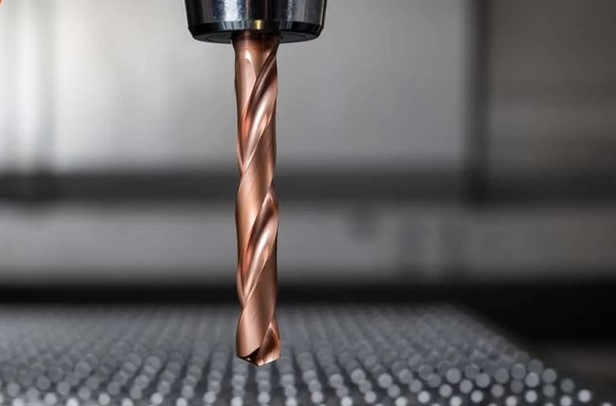
Drilling isn’t just about pushing into a material; it’s about getting the waste material out. The spiral grooves wrapped around a bit—known as flutes—act like a miniature screw conveyor. High-efficiency bits feature optimized flute geometry that rapidly pulls wood chips or metal swarf away from the cutting hole, preventing heat accumulation and binding.
Pro-Tips for Speed Calibration and Extended Tool Life
Over a decade of burning through bits and managing field crews has taught me that tool longevity is determined entirely by technique, not luck.
💡 Pro-Tip: The Slow and Steady Metal Rule
The biggest mistake intermediate DIYers make when switching from wood to metal drilling is running their drill motor at maximum RPM. High speed in metal creates friction, friction creates heat, and heat destroys the heat-treatment temper of your steel bit. When using a large bit from your bit set drill on metal, drop your drill into Gear 1 (low speed), apply firm downward pressure, and use a few drops of 3-in-1 cutting oil to lubricate the channel.
Managing the Hammer Action Loop
When you swap over to the carbide-tipped masonry bits in your set, remember that carbide doesn’t cut concrete—it pulverizes it. For these bits to work, you must switch your drill into hammer mode. The tool will deliver thousands of tiny, high-frequency forward impacts per minute, shattering the stone aggregate while the flutes clear away the dust slurry.
What Can Instantly Ruin Your Kit
Even a premium, heavy-duty accessory kit can suffer catastrophic failures if you ignore simple structural limits during operation.
-
The Extension Bit Binding Trap: If you are using long extension bars or driving deep spade bits into thick structural timbers, never let the drill tilt off-axis mid-bore. Even a slight angular bend while the bit is spinning at high speeds applies immense lateral torque, which will snap high-carbon steel bits like glass.
-
The Impact Driver Mismatch: Many modern bit set drill kits feature convenient 1/4-inch hex shanks designed to snap straight into quick-release impact drivers. Be cautious: the violent, rotational hammer blows of an impact driver can easily shatter standard high-speed steel twist bits when they bind in metal. Use dedicated impact-rated bits for heavy driving, and save standard bits for your traditional rotary drill chuck.
-
Neglecting the Quick-Change Cleanout: Dust, metal shavings, and moisture love to settle inside the organizational slots of your bit case. If you pack away your kit damp or covered in green wood sap, galvanic corrosion can form between the different metal coatings. Take 30 seconds to wipe your bits clean with an oily rag before locking down the case latch.
Scaling Your Workshop Capabilities for Tomorrow
Upgrading your toolkit with a highly engineered bit set drill array is a watershed moment for any developing maker or home improvement enthusiast. It bridges the gap between struggling through basic repairs and confidently executing complex, multi-material fabrication projects. By understanding bit metallurgy, matching tip geometries to your target materials, and respecting the laws of friction and speed calibration, you unlock a standard of structural precision that elevates your entire craft.
What material or project has given you the hardest time during your past drilling setups, and how are you planning to upgrade your accessory layout? Let’s troubleshoot your workshop bottlenecks and share tool tips in the comments section below!