Ergonomic Workplace Safety: Enhancing Personnel Comfort with the Anti Fatigue Rug
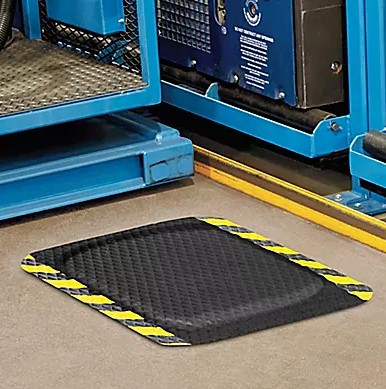 You’ve been standing at your garage workbench or kitchen island for barely two hours, but your body feels like it just ran a marathon. A dull ache radiates from your heels, your lower back feels compressed, and your calves are tightening up by the minute. You look down, blaming your shoes, but the real culprit is staring right back at you: the unyielding, unforgiving concrete or tile floor.
Over my 10+ years of remodeling homes and optimizing residential workspaces, I have seen people invest heavily in high-end tools, ergonomic chairs, and custom lighting. Yet, they completely overlook the surface they stand on. It’s a costly oversight.
Prolonged standing on hard surfaces doesn’t just cause temporary discomfort; it leads to chronic physical fatigue and long-term joint strain. That is why implementing a high-quality anti fatigue rug is one of the smartest, most immediate upgrades you can make to your workspace infrastructure. Let’s dive deep into the science of ergonomic flooring and how to choose a setup that keeps you standing strong.
The Physiology of Standing: Why Hard Floors Are Ruining Your Joints
To understand why your body rebels against hard floors, we need to look at human biomechanics. When you stand completely still on concrete, asphalt, or ceramic tile, your lower limb muscles lock into a state of static contraction.
The Dynamic Micro-Movement Analogy
Think of your circulatory system like a network of water pipes, and your calf muscles as a mechanical pump. When you walk, your calf muscles contract and relax, acting as a pump to push blood back up to your heart.
When you stand still on an unyielding surface, that pump shuts down. Blood pools in your lower extremities, your heart works harder, and your joints absorb 100% of the downward gravitational shock. An anti fatigue rug works by creating an unstable, cushioned surface at a microscopic level. It forces your lower muscles to make subtle, imperceptible micro-movements to stay balanced, keeping the muscular pump active and fluid circulating.
Material Science: Breaking Down Ergonomic Mat Composition
Not all padded mats are created equal. If you buy a cheap foam runner from a big-box store, you’ll find it flattened down to the thickness of paper within three months. To get true structural support, you need to look at the material engineering under the hood.
+-------------------------+----------------------------------+------------------------------------+
| Material Composition    | Best Used For                    | Durability & Resilience            |
+-------------------------+----------------------------------+------------------------------------+
| Polyvinyl Chloride (PVC)| Low-traffic areas, budget home   | Moderate (Comfortable but prone to |
| Foam                    | offices                          | compression sets over time)        |
+-------------------------+----------------------------------+------------------------------------+
| Polyurethane (PU) Foam  | Kitchens, standing desks, high   | High (Excellent tear resistance,   |
|                         | traffic residential use          | instant bounce-back memory)        |
+-------------------------+----------------------------------+------------------------------------+
| Nitrile Rubber          | Garages, workshops, oily/wet     | Industrial Grade (Impervious to    |
|                         | environments                     | chemicals, maximum life cycle)     |
+-------------------------+----------------------------------+------------------------------------+
1. Closed-Cell Polyurethane (PU)
This is the gold standard for residential and office comfort. Polyurethane foam provides the perfect equilibrium between softness and structural rebound. It doesn’t “bottom out” under heavy weight, meaning your heels never touch the hard subfloor beneath.
2. Nitrile Rubber Composites
If you are outfitting a workshop or home garage, oil spills, grease, and heavy work boots will instantly disintegrate standard foam mats. Nitrile rubber is an industrial-grade elastomer engineered to resist chemical breakdown while providing exceptional shock absorption.
Anatomy of a High-Performance Anti Fatigue Rug
When you start shopping for an anti fatigue rug, you should evaluate specific design features to ensure it meets workplace safety and ergonomic standards.
Beveled Edges for Trip Prevention
A thick mat with a straight vertical edge is a dangerous tripping hazard in a busy kitchen or workshop. High-quality ergonomic rugs feature beveled edges (slanted borders). This gradual incline allows your feet—and rolling shop carts or office chairs—to transition smoothly onto the mat without catching the lip.
Slip-Resistant Backing and Traction
The top surface of your rug should feature a textured pattern (like diamond plate or woven ribbing) to provide adequate traction, even if your shoes are wet. Equally important is the bottom layer. Look for a high-coefficient non-slip backing that grips your specific subfloor type—whether it’s polished hardwood or dusty garage concrete.
Step-by-Step Selection: Matching the Rug to Your Workflow
Choosing the right anti fatigue rug requires evaluating your specific daily habits, footwear, and space layout.
Step 1: Measure Your Standing Footprint
Don’t just measure the room; measure your actual operational radius. If you are outfitting a kitchen sink station, a standard 20×32 inch mat is perfect. However, if you are working along a long garage workbench, you should opt for an elongated anti fatigue runner so you can slide side-to-side without stepping off the cushioned zone.
Step 2: Account for Your Typical Footwear
-
Barefoot or Socks: If you work at a home office standing desk without shoes, select a softer, plush polyurethane mat that cradles the contours of your feet.
-
Heavy Work Boots: For workshops, you need a high-density, firmer rubber mat. A soft mat will compress instantly under the stiff sole of a work boot, completely defeating the ergonomic benefits.
Pro Tip: The Core Thickness Test. When shopping, look for a mat thickness between $\frac{1}{2}$ inch and $\frac{3}{4}$ inch. Anything thinner than a half-inch won’t provide enough suspension, and anything thicker than three-quarters of an inch can create an unstable surface that actually causes ankle fatigue over long periods.
Maintenance and Workplace Safety Hazards
Even the toughest industrial mats require basic care to maintain their structural elasticity and hygienic safety.
Never wash a polyurethane or rubber anti fatigue mat with harsh chemical solvents, bleach, or boiling water. These chemicals strip away the plasticizers that give the mat its flexible memory, causing the material to harden, crumble, and split prematurely.
The Proper Cleaning Protocol
To preserve your mat’s life cycle, stick to a simple cleaning routine. Sweep or vacuum away loose debris weekly. For deeper cleaning, wipe down the surface using a microfiber cloth dampened with warm water and a few drops of mild dish soap. Allow the mat to air-dry completely before laying it back down on the floor to prevent trapping moisture beneath it.
Protect Your Greatest Tool: Your Body
True home improvement isn’t just about structural upgrades to your walls or plumbing; it’s about optimizing the environment for the person operating within it. Investing in an engineered anti fatigue rug is a proactive step toward protecting your joints, increasing your daily productivity, and transforming your workspace into a comfortable, high-efficiency zone.
Are you currently struggling with lower back pain or sore feet while working on your home projects? Where is the hardest floor surface in your house located? Let me know in the comments below, and I’ll help you choose the perfect ergonomic mat configuration for your space!