Automated Resource Management: Precision Watering with the Smart Sprinkler Timer
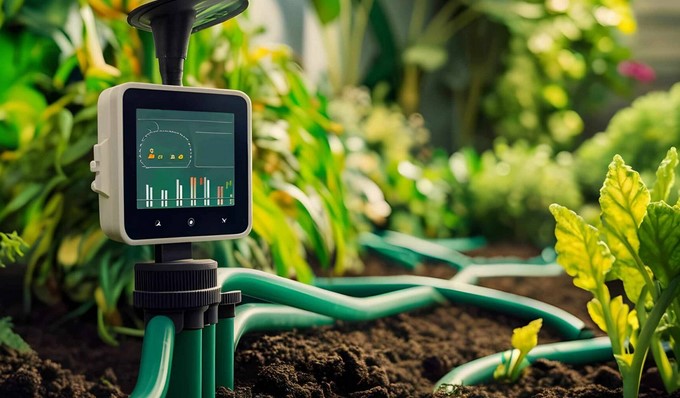
Source:https://forwardfooding.com
It’s 4:30 AM on a Tuesday. A sudden, torrential downpour is slamming against your bedroom window. While you’re tucked under the covers, you hear a familiar click-clack-hiss from the front yard. Your traditional irrigation system has just kicked on, dutifully—and wastefully—watering your lawn in the middle of a rainstorm. It’s not just a waste of water; it’s a direct hit to your wallet and a recipe for root rot.
In my fifteen years of managing high-end residential landscapes, I’ve seen homeowners pour thousands of dollars into designer sod, only to drown it or let it parch because of “dumb” timers. The transition to a Smart Sprinkler Timer isn’t just a gadget upgrade; it’s moving from a blind schedule to an intelligent, data-driven ecosystem. If your home is your castle, this is the gatekeeper of your most precious resource.
The Intelligence Revolution: Why Your Lawn Needs a Brain
For decades, irrigation was “dumb.” You set a clock, and it stayed that way until the power went out or you manually changed it. But in the world of high-end home improvement, we treat water as a strategic asset.
I remember a project in a drought-prone neighborhood where the client was facing heavy fines for over-watering. We swapped their old mechanical dial for a Smart Sprinkler Timer, and their water bill dropped by 35% in the first month. The insight? Most people don’t realize that a lawn’s water needs change daily based on humidity, wind speed, and soil moisture levels.
Think of a smart timer like the “Autopilot” of a modern aircraft. A pilot (you) sets the destination, but the autopilot makes micro-adjustments for wind and weather to ensure the most efficient flight possible. Your sprinkler should do the same for your grass.
Engineering the Perfect Pour: Technical Specs for Success
When we talk about “Automated Resource Management,” we are looking at a system that connects to local weather stations via Wi-Fi to skip watering days automatically. But before you buy, you need to understand the hardware.
1. Zone Management and Expansion
Most residential yards are split into “zones” (e.g., Zone 1 is the front lawn, Zone 2 is the flower beds).
-
Zone Capacity: Ensure your Smart Sprinkler Timer supports at least two zones more than you currently have. You’ll thank me when you decide to add that vegetable garden next year.
-
Terminal Wiring: Look for units with “push-to-connect” terminals. They prevent the wire corrosion and loose connections that plague older screw-terminal models.
2. The Weather Intelligence Engine
The “Smart” in these devices comes from algorithms.
-
EPA WaterSense Certification: This is the gold standard. It ensures the device has been tested to save water while keeping plants healthy.
-
Hyper-Local Forecasts: High-end units don’t just check “the weather”; they check the specific weather station at the end of your street.
3. Essential LSI Keywords to Know:
-
Evapotranspiration (ET): The process by which water is transferred from the land to the atmosphere by evaporation and by transpiration from plants.
-
Solenoid Valve: The electrical component that opens and closes the water flow.
-
Master Valve: A safety valve that shuts off the main water supply if a leak is detected in a sub-zone.
-
Soil Moisture Sensor: An optional probe that tells the timer exactly how “thirsty” the dirt is.
Mastering the Install: Pro-Level Integration
Installing a Smart Sprinkler Timer is surprisingly simple—it’s essentially “color-matching” wires—but the calibration is where the experts separate themselves from the amateurs.
Step 1: The Wire Migration
Most old timers have a “Common” wire (usually white) and colored wires for each zone. Take a photo before you disconnect! If you cross these wires, you might find your flower beds being watered when the controller thinks it’s the lawn.
Step 2: Soil Profiling
In the app, you’ll be asked for your soil type.
-
Clay: Absorbs water slowly. You need “Cycle and Soak” settings to prevent runoff.
-
Sand: Drains instantly. You need shorter, more frequent watering bursts.
Step 3: Slope Calibration
If your yard has a hill, the water will naturally run to the bottom. A smart timer allows you to adjust the “soak time” so the water actually reaches the roots on the incline rather than creating a puddle on the sidewalk.
Expert Advice: The “Hidden Warning” of Wi-Fi Strength
Pro Tip: The Stucco Shield
I once spent three hours troubleshooting a controller that “wouldn’t stay online.” The problem? It was mounted on the outside of a house with stucco siding.
Peringatan Tersembunyi (Hidden Warning): Stucco often contains metal mesh (lathe) that acts like a “Faraday Cage,” blocking Wi-Fi signals. If you are mounting your Smart Sprinkler Timer outdoors, check your signal strength at the mounting spot with your phone before you drill holes. If the signal is weak, you may need a Wi-Fi extender or a controller with an external antenna.
The ROI of Precision: Beyond the Water Bill
In high-end residential branding, we look at curb appeal. Over-watering causes “fungal blooming” and “yellow leaf chlorosis.” Under-watering causes “heat dormancy” and brown spots.
By using a Smart Sprinkler Timer, you are ensuring that your landscape stays in the “Peak Aesthetic Zone” year-round. You are protecting your investment in the landscape. A dead 20-year-old oak tree costs $5,000 to remove and replace; a $200 smart timer is the insurance policy that keeps it alive.
Analogy: The Intelligent Personal Trainer
Think of a traditional timer like a gym trainer who makes everyone do 100 pushups every day, regardless of whether they are tired, sick, or already fit. It’s rigid and eventually leads to injury.
A Smart Sprinkler Timer is the Elite Personal Trainer. It checks your heart rate (soil moisture), checks the outdoor temperature, and looks at your schedule. If it’s too hot, it scales back. If you’re dehydrated, it pushes harder. It tailors the “workout” to exactly what your lawn needs at that specific moment.
Maintenance: The “Spring Startup” Checklist
Even a smart system needs a human eye once a year.
-
Check the Rain Sensor: Even though the timer uses Wi-Fi, a physical rain sensor is a great “hard-wired” backup. Make sure it isn’t clogged with spider webs.
-
Inspect the Solenoids: Listen for a “hum” at your valve box. If it’s loud, the valve might be failing.
-
Update the Firmware: Just like your phone, these devices get smarter with software updates. Check your app for the latest performance patches.
Conclusion: Claiming Your Weekend Back
The ultimate luxury in home improvement is time. When you automate your resource management with a Smart Sprinkler Timer, you stop worrying about the weather forecast. You stop running out in your pajamas to turn off the water when it starts raining. You gain a home that is smarter, more efficient, and undeniably more beautiful.
Transforming your yard into a precision-managed ecosystem is one of the most satisfying “quick wins” in home ownership. It’s good for the earth, good for your lawn, and excellent for your peace of mind.
Is your current sprinkler system “stuck in the past,” or are you worried about the complexity of the wiring? I’ve seen every configuration of valve boxes imaginable! If you’re unsure how many zones your property actually has, I can help you identify them. Would you like me to create a “Zone Mapping Guide” for your specific yard layout?